

At the Jaynes Workbench for 26 Years: What Comes Next for Paul Rivera
After 26 years at Jaynes, Paul Rivera reflects on craftsmanship, change, and the people who made Jaynes a place to stay.
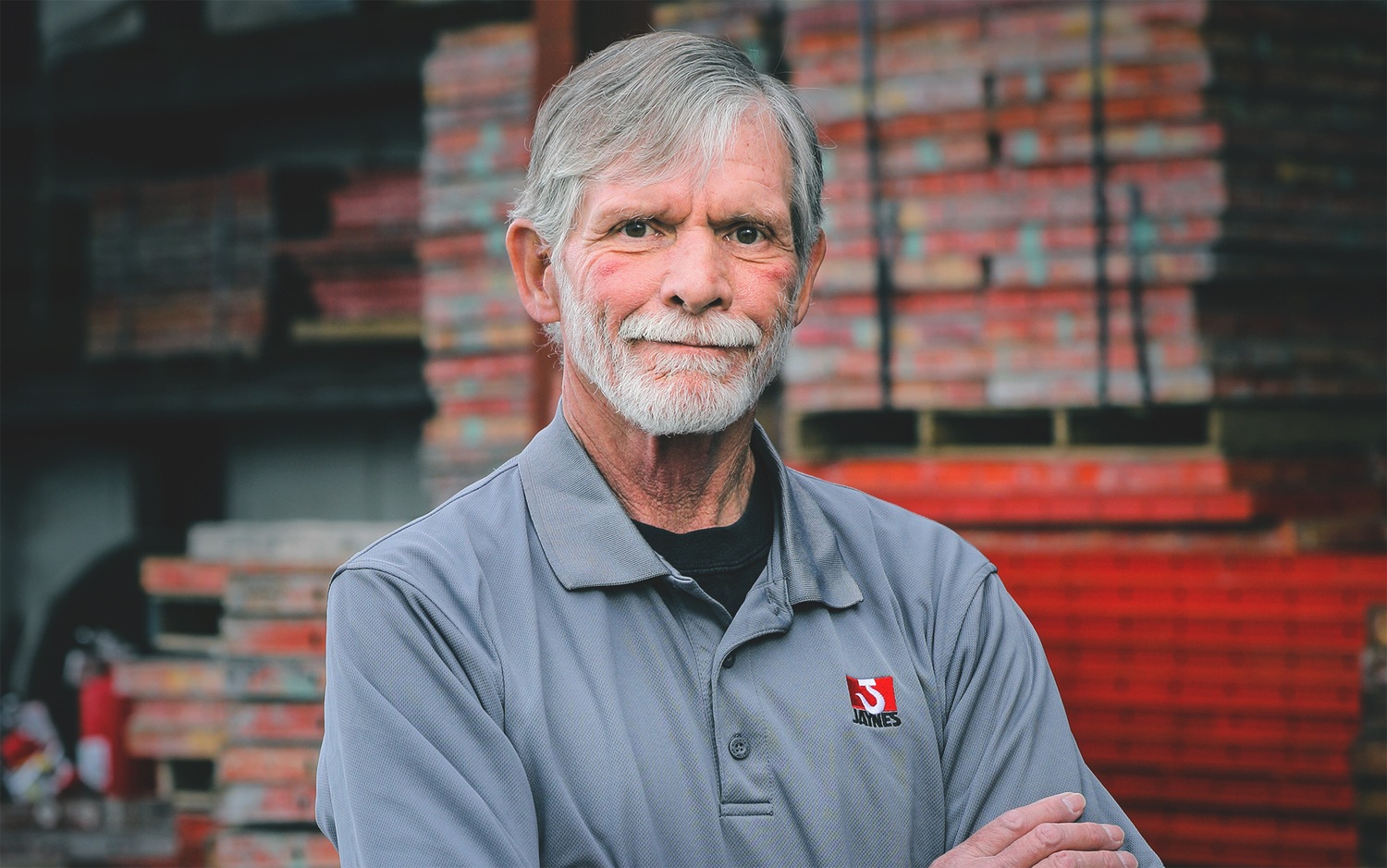
When Paul Rivera started at Jaynes, he took his place at a workbench in the millwork shop. Twenty-six years later, as he prepared to retire, he was still working at that same bench.
The tools and methods around him had changed. Work that once required days of drawing on the floor could now begin on a computer. A computer-controlled machine could now cut curves that once demanded a homemade compass and a router. Younger coworkers brought different ways of approaching familiar problems.
Paul kept learning.

His retirement closes a chapter in Jaynes Millwork, but his story reaches beyond the projects he helped build. It is about finding a craft, adapting as that craft changes, and sharing enough knowledge that others can carry the work forward.
“I would like to think that the people I've worked with,” he said, “that I've taught them something.”
For Andrew Sisneros, Jaynes Millwork Division Manager, that contribution begins with the care Paul brings to his work.
“His woodworking skills are exceptional, but what has always distinguished Paul is the remarkable attention to detail and pride he brings to everything he creates,” Andrew said.
Felix Hendrickson, Jaynes Millwork Head of Product and Engineering , said, “I want to thank him for his friendship, his craftsmanship, and the lasting impact he has had on all of us. More than a master woodworker, Paul has been a mentor, a standard-bearer, and, in many ways, the template for what we strive to be. His work can be found in countless projects, but his greatest legacy will be the people and culture he helped shape along the way.”
Finding a craft
Paul did not begin woodworking with a long-term career plan. In 1984, he started working in a woodworking shop run by a high school friend. At first, it was a job.
The more time he spent there, the more he found he enjoyed the work.
“The more I got into it and the longer I was in it, the more I discovered things about it, and it turned out I had a knack for it,” he said.
That aptitude became a career. Before joining Jaynes, Paul worked in several other wood shops, including influential Architectural Woodworking in Albuquerque. There, he worked alongside Chuck Trujillo, who later became a foreman at Jaynes and wanted Paul to join him.
Paul was not easily persuaded. He had spent about a decade at Architectural Woodworking and tended to stay where he worked. Chuck kept asking. After roughly six months, Paul made the move.
Asked how he describes his profession today, Paul prefers “woodworker.” The word leaves room for the variety he enjoys: cabinetry, drafting, solid wood, and specialty work that requires him to figure out something new.
His favorite materials include Spanish cedar and sugar pine. But his satisfaction is not limited to a particular wood or task. Even work he jokes about disliking can become something worth appreciating when it is finished.
“But when you finish something, the client is happy, that's pretty cool.”
Learning a different way
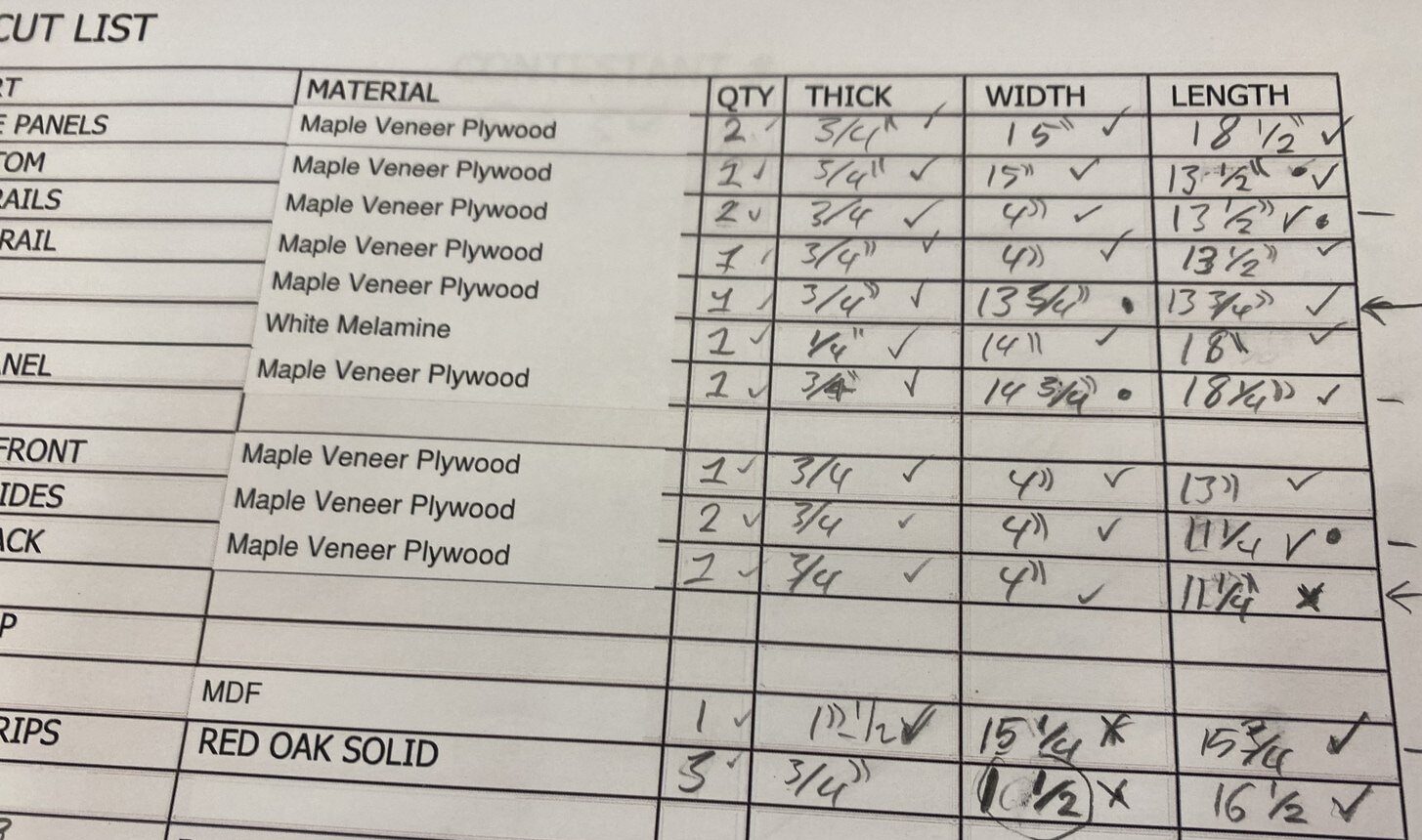
Earlier in his career, a complicated assembly often began with a full-size drawing on the shop floor. Paul could spend days laying out a project, determining angles, and working through its geometry before building the parts.
Curved work added another challenge. Sheets of particleboard became the starting point for a large compass fitted with a router.
Paul enjoyed that process. When the shop was preparing to introduce a computer numerical control machine, or CNC, he was skeptical. Some of the work he liked most appeared likely to disappear.
But he had already taught himself AutoCAD to get drawing information he needed at a previous shop. That experience made the new process easier. He learned to prepare drawings for the CNC, transferring familiar layout problems from the floor to the screen.
The work still required him to think through how something would fit together. He could explore options faster and make changes without repeatedly erasing pencil lines.
“So now I'm still doing layouts, but now I'm doing them on the computer,” he said. “And my knees feel better because I'm no longer crawling for hours all over the shop floor.”
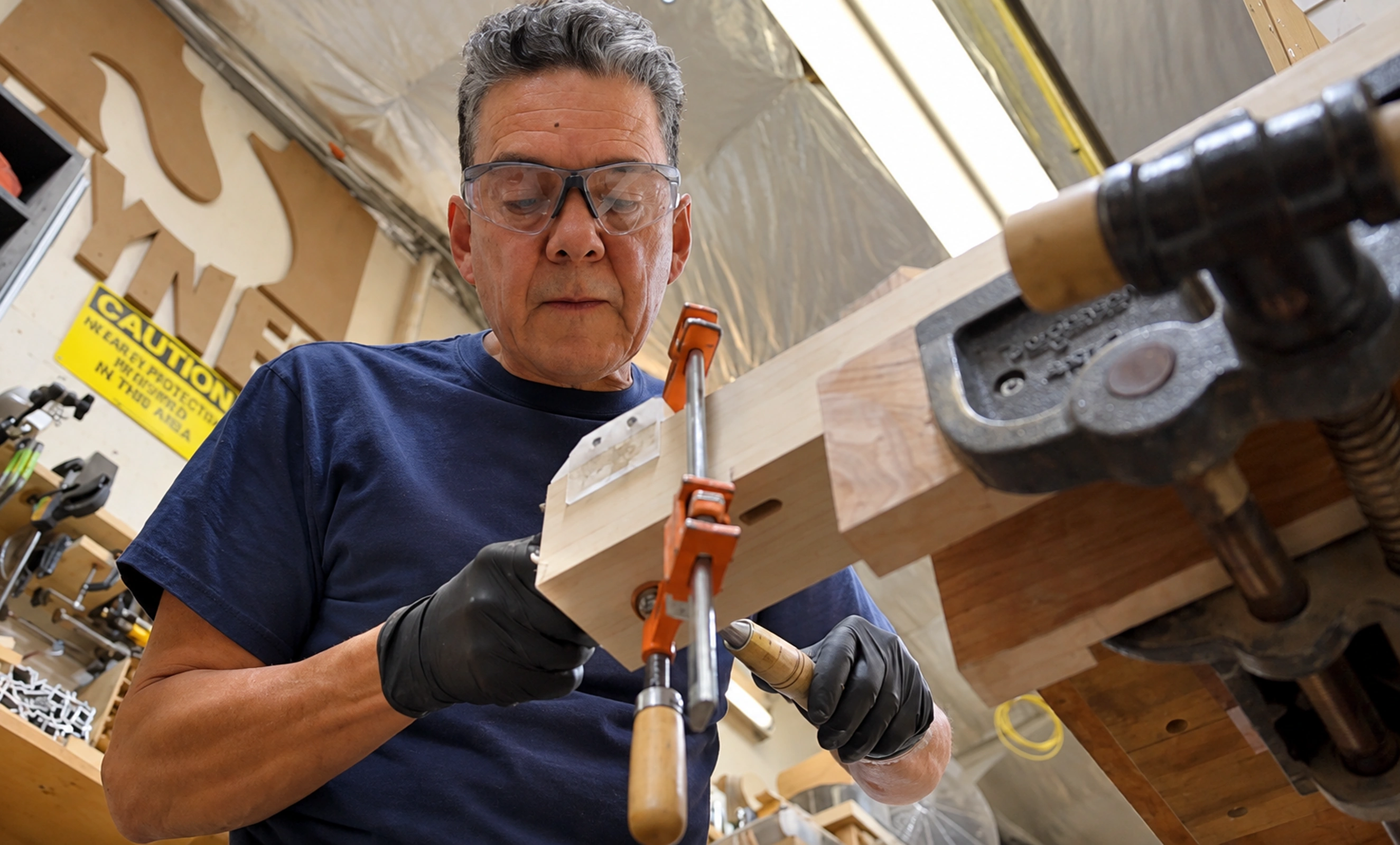
His initial reluctance gave way to interest. Technology offered another way to practice the craft, with possibilities he came to appreciate.
Making the pieces fit
One project Paul remembers with particular satisfaction involved a recessed ceiling for a civic building in Las Cruces.
He described a large circular arrangement containing latticework and panels with related but different shapes. The challenge was to build the pieces in the shop and have them fit a ceiling he had not seen in person.
Paul laid out the work on the shop floor and sent a template for the drywall crew to follow. His fabrication and their construction had to agree when the millwork arrived.
“And everything just turned out really well,” he recalled.
The memory captures what he enjoys about specialty work: solving the problem, making the pieces, and seeing the result come together.
“His methods reflect decades of knowledge, patience, and incredible craftsmanship that are increasingly rare, impossible to replace,” Andrew said.
Paul also recalls renovations in Santa Fe that called for methods resembling older craftsmanship. His interest in carving grew earlier in his career while watching skilled carvers at another shop. At Jaynes, he later had an opportunity to teach newer coworkers carving techniques for baluster work, with the company providing tools.
Those opportunities connected his own curiosity with someone else’s chance to learn.
Knowledge moves both ways.
Paul’s advice to younger woodworkers is direct: take responsibility for learning what interests you.
“If you want to learn, you need to go out and learn it.”
That is how he approached AutoCAD and expanded his knowledge of wood joinery. He encourages others to seek information beyond their daily assignments, especially when a technique does not come through the shop often enough to practice regularly.
He also pays attention to what younger coworkers can teach him.
Someone approaching a task for the first time may see a solution that an experienced worker overlooks. Paul has caught himself watching a younger person work and wondering why he had not tried that approach.
Experience, in his view, gives a person knowledge to share and habits to reconsider.
“I always said that if you stop learning, you might as well just hang it up and go do something else.”
A place worth staying
When Paul explains why he stayed at Jaynes for 26 years, he returns to the people.

He understands the business has to make money. What mattered to him was seeing that responsibility accompanied by care for the people doing the work.
He names Felix Hendrickson as an especially important influence, someone who helped shape his approach to business and his attitude toward getting things done.
He also admires the knowledge, enthusiasm, and commitment he sees in other shop leaders and coworkers.
Speaking about Andrew Sisneros, Jaynes Division Manager, Paul points to the support he gives others as they take on unfamiliar responsibilities.
“He's such a go-getter, and he doesn't let anybody fall.”
Andrew sees Paul’s contribution to the team in similarly personal terms.
“His craftsmanship has left a lasting mark on our work, but his character has made an equally lasting impression on our people,” Andrew said.
As he looks toward the shop’s future, Paul hopes the knowledge he has shared will travel with his coworkers. He believes specialty craftsmanship will continue to have a place as production methods evolve.
Leaving room for what comes next
Retirement does not feel like finishing every project. Paul acknowledged that there will always be something underway, something changing, or another reason to stay.

After 26 years at Jaynes, he wants time to enjoy life with his wife, Patricia, visit family, and walk a golf course while he can.
The bench he occupied will become someone else’s place to work. What he taught can keep moving through the shop: a carving technique, a better approach to a layout, or a willingness to learn from the person nearby.
Paul is ready to make room for that next chapter.
“I want to be able to enjoy my retirement.”

Insights


.jpg)









Durango, CO 81301
Las Cruces, NM 88001