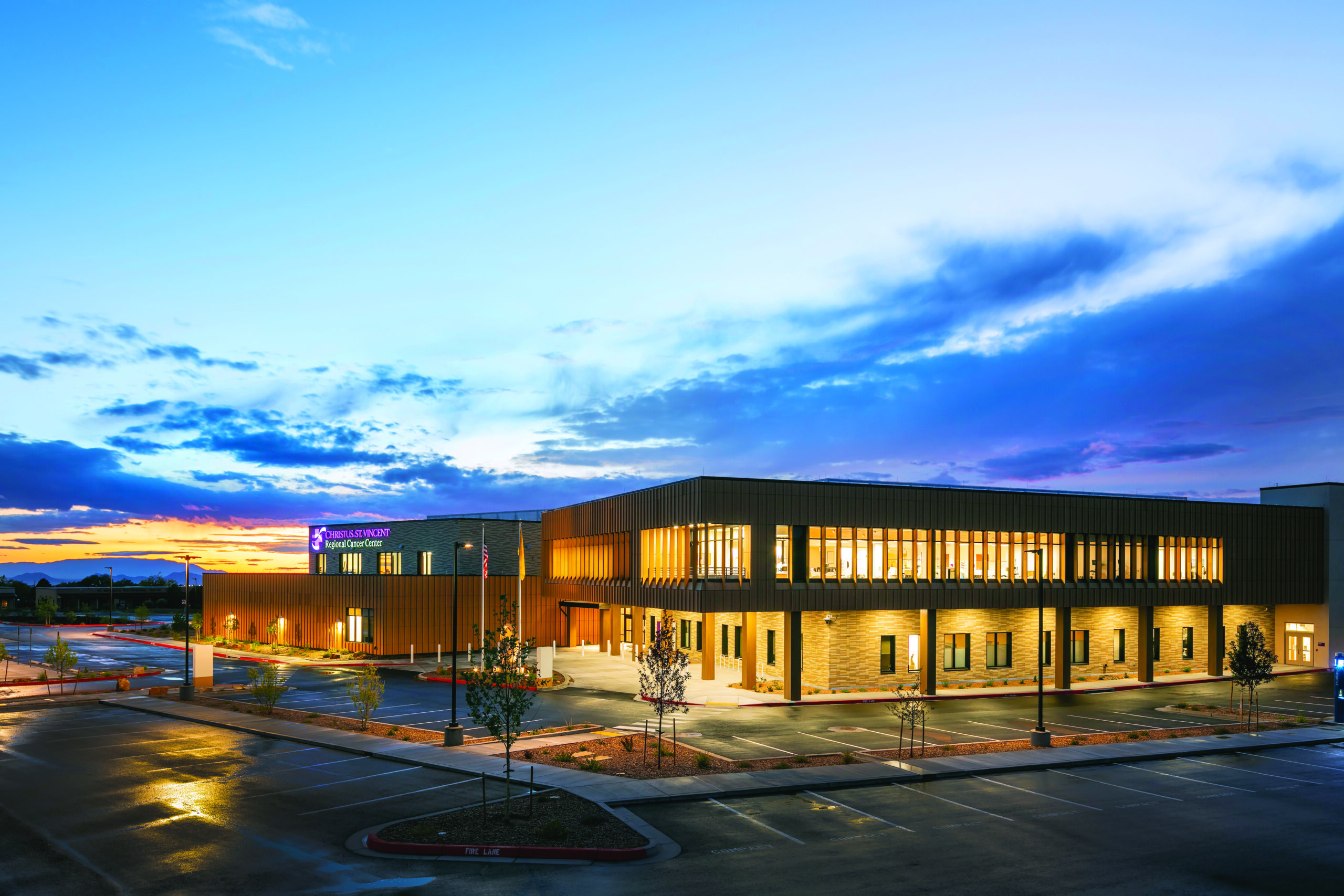
CHRISTUS St. Vincent Regional Cancer Center Earns the 2026 AGC New Mexico Best Buildings Grand Prize
According to AGC New Mexico, one project stands above all others in New Mexico’s construction industry in 2026.
The CHRISTUS St. Vincent Regional Cancer Center in Santa Fe, delivered by Jaynes Corporation, has earned the Grand Prize in the Associated General Contractors of New Mexico Best Buildings competition. The Grand Prize award represents the highest honor across all categories. This best-in-show designation recognizes not only excellence in constructability but also innovation, collaboration, and lasting community impact.
More than a construction success story, the CHRISTUS St. Vincent Regional Cancer Center is a story about vision and the kind of problem-solving that rarely makes headlines, but ultimately defines the future of healthcare construction.
A New Standard for Healthcare Construction in Santa Fe
Located on the campus of CHRISTUS St. Vincent Regional Medical Center in Santa Fe, the Cancer Center represents a significant leap forward in healthcare construction in Santa Fe and across Northern New Mexico.
The facility consolidates a full spectrum of oncology services, radiation therapy, medical oncology, infusion, imaging, and support services into a single, purpose-built environment. For patients, this means something simple but profound: fewer miles traveled, fewer fragmented appointments, and more care delivered closer to home.
But the ambition for the project extended far beyond clinical consolidation.
From the earliest planning conversations, the vision was clear: this would not be a “big box” hospital addition.
Instead, the goal was to create something fundamentally different.
Designing for Healing, Not Just Treatment
For Rick Carboni, Executive Director at Christus St. Vincent and the project’s owner representative and longtime healthcare leader, the inspiration came from a surprising place: hospitality design.
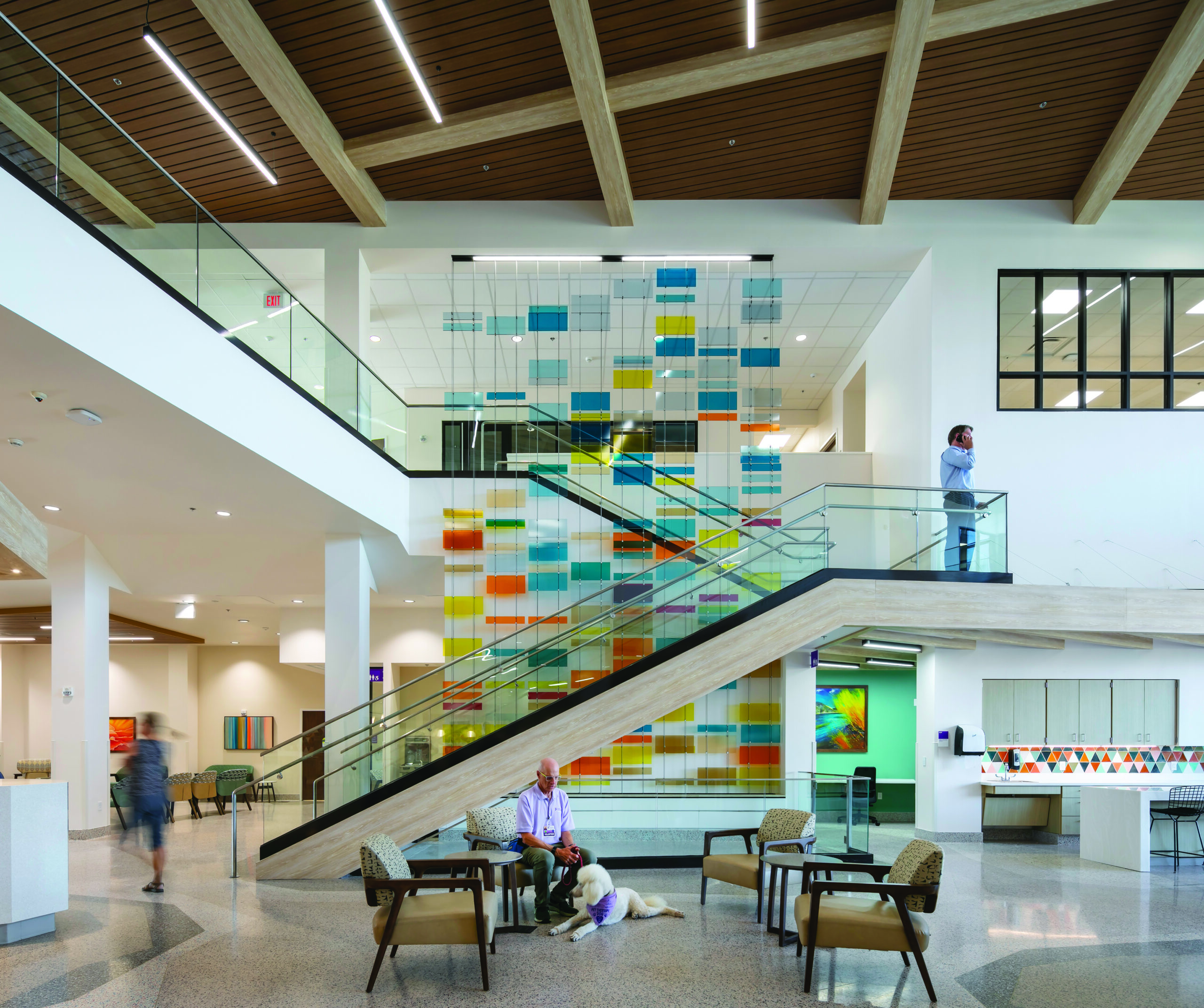
“When you walk into this facility, it’s meant to feel NOT like a hospital,” Carboni explained. “It’s a welcoming environment that hopefully serves people well during a very difficult time in their lives. That was always the vision.”
That vision translated into design priorities that shaped every decision:
- Abundant natural light
- Open, inviting circulation paths
- Warm, hospitality-inspired interiors, and
- A deliberate rejection of institutional, clinical aesthetics
The result is a facility that feels closer to a high-end hotel, some say even a museum or art gallery, than a traditional hospital, an intentional contrast to the anxiety many patients associate with cancer treatment.
Sunlit infusion areas, carefully scaled treatment rooms, and thoughtfully detailed interiors create an environment that prioritizes dignity and comfort. Even the most technical spaces, like radiation therapy suites, were designed to reduce psychological stress.
This emphasis on patient experience became a unifying principle across the entire project team.
The Challenge of Building on an Active Hospital Campus
Constructing a complex cancer center is challenging under any circumstances. Building one on an active hospital campus raises the stakes significantly.
At CHRISTUS St. Vincent, construction had to occur alongside ongoing patient care, requiring:
- Continuous hospital access
- Strict infection control protocols
- Noise and vibration mitigation, and
- Coordinated emergency access routes
Jaynes addressed this through highly detailed phasing and logistics planning. Deliveries were scheduled during off-peak hours. Access zones were tightly controlled. Construction activities were sequenced to minimize disruption to both hospital operations and the surrounding community.
Behind the scenes, real-time coordination between construction teams and hospital staff ensured that critical healthcare services remained uninterrupted.
This level of operational integration is typically invisible. But it’s essential to successful cancer center construction on an active hospital campus, one of the defining challenges recognized by the AGC NM Best Building Grand Prize award.
The Hidden Story: A CMAR Solution That Changed Everything
Every award-winning project has a defining characteristic. For the CHRISTUS St. Vincent Regional Cancer Center, it isn’t immediately recognizable.
It’s the bridge.
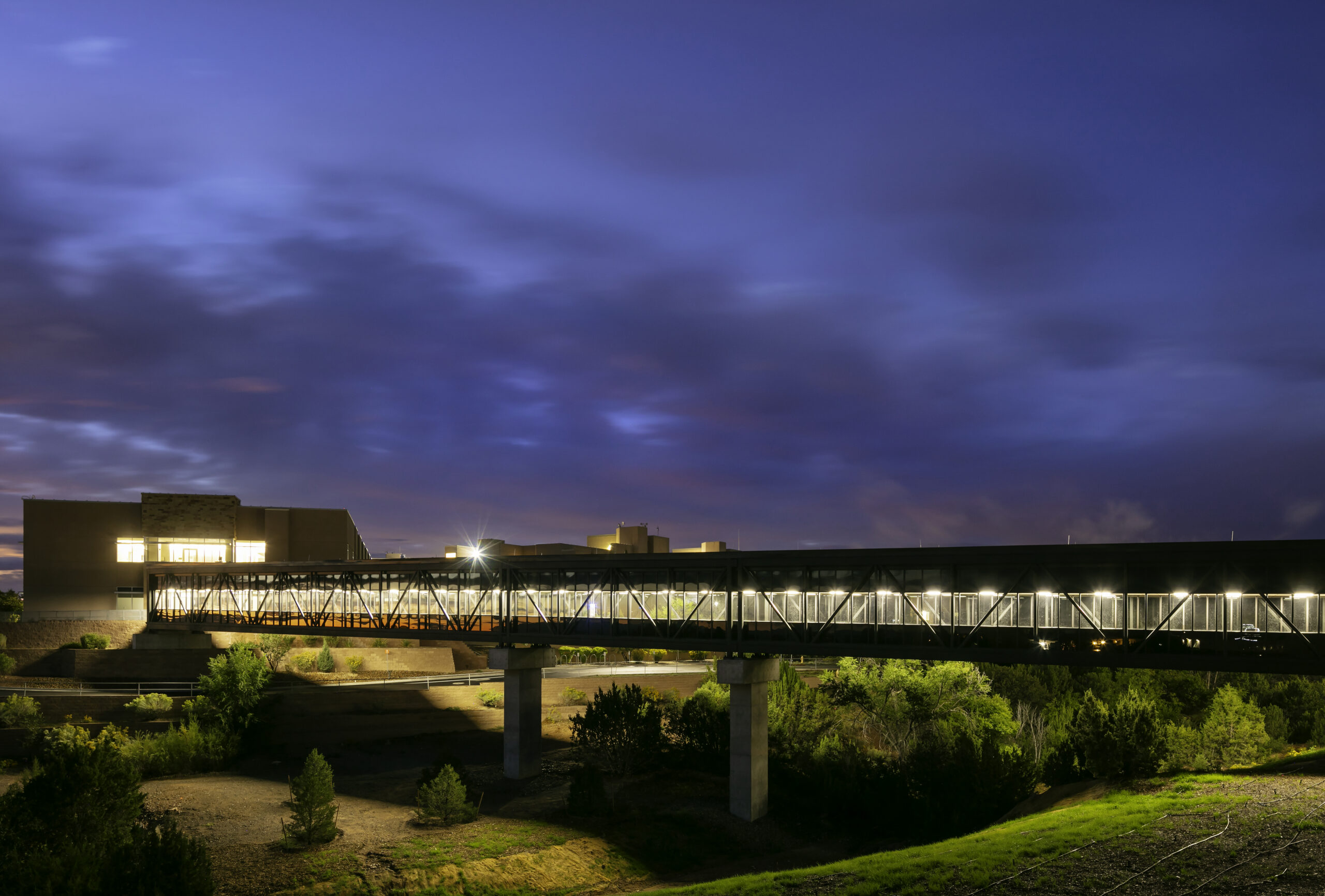
Early in design, the facility was planned as a standalone structure, complete with its own central plant systems: mechanical equipment, chilled water, power infrastructure, and more. That approach would have required thousands of additional square feet dedicated to non-clinical infrastructure.
Carboni challenged that assumption. “Why build another power plant when we already have capacity?” he asked.
The answer to that question led to one of the more elegant engineering solutions in recent New Mexico construction: a fully integrated elevated connector linking the cancer center to the existing hospital. To lean on the healthcare angle, an umbilical cord was designed to connect the campus’s main power plant to the new facility across a protected, environmentally sensitive arroyo.
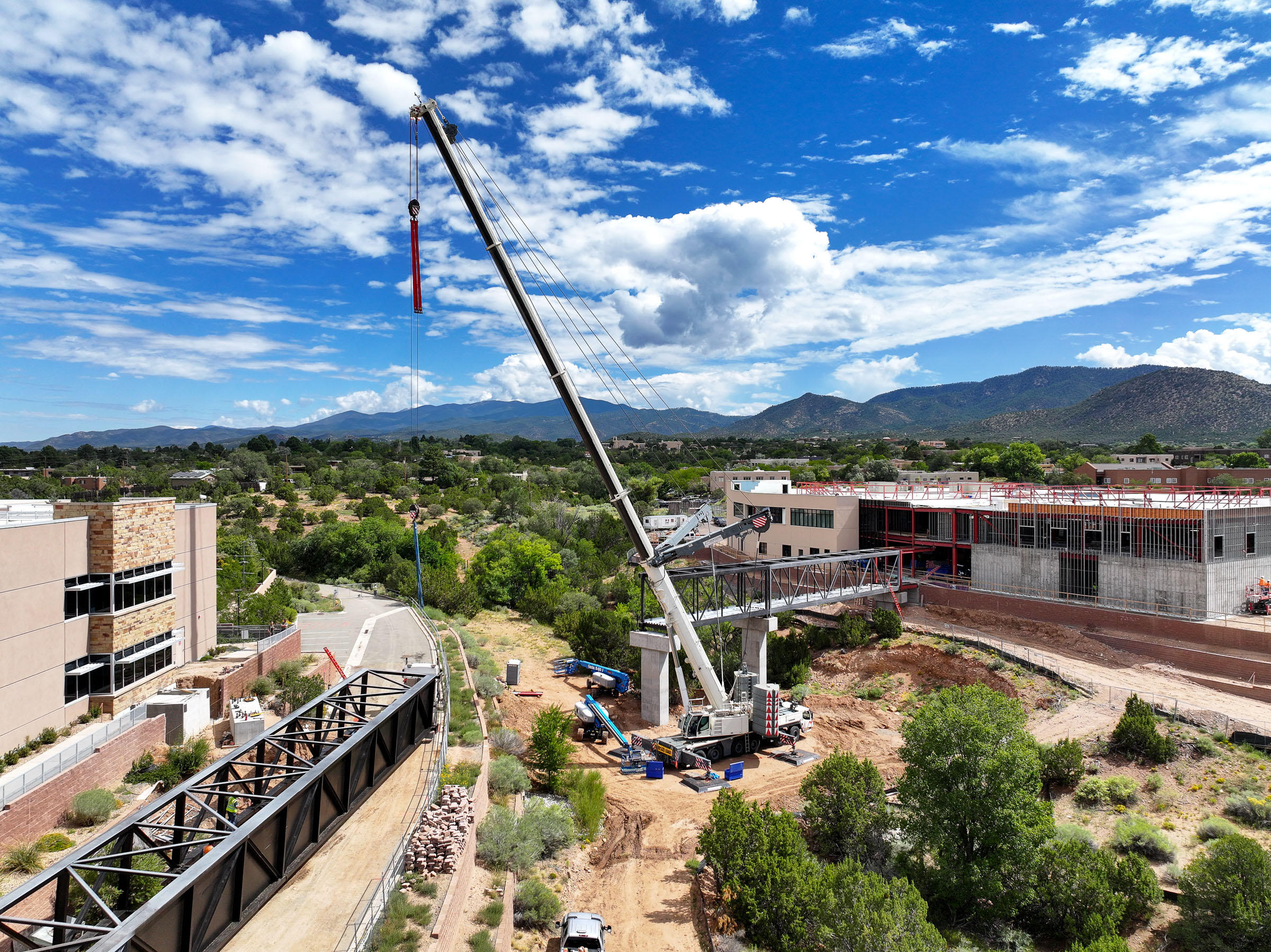
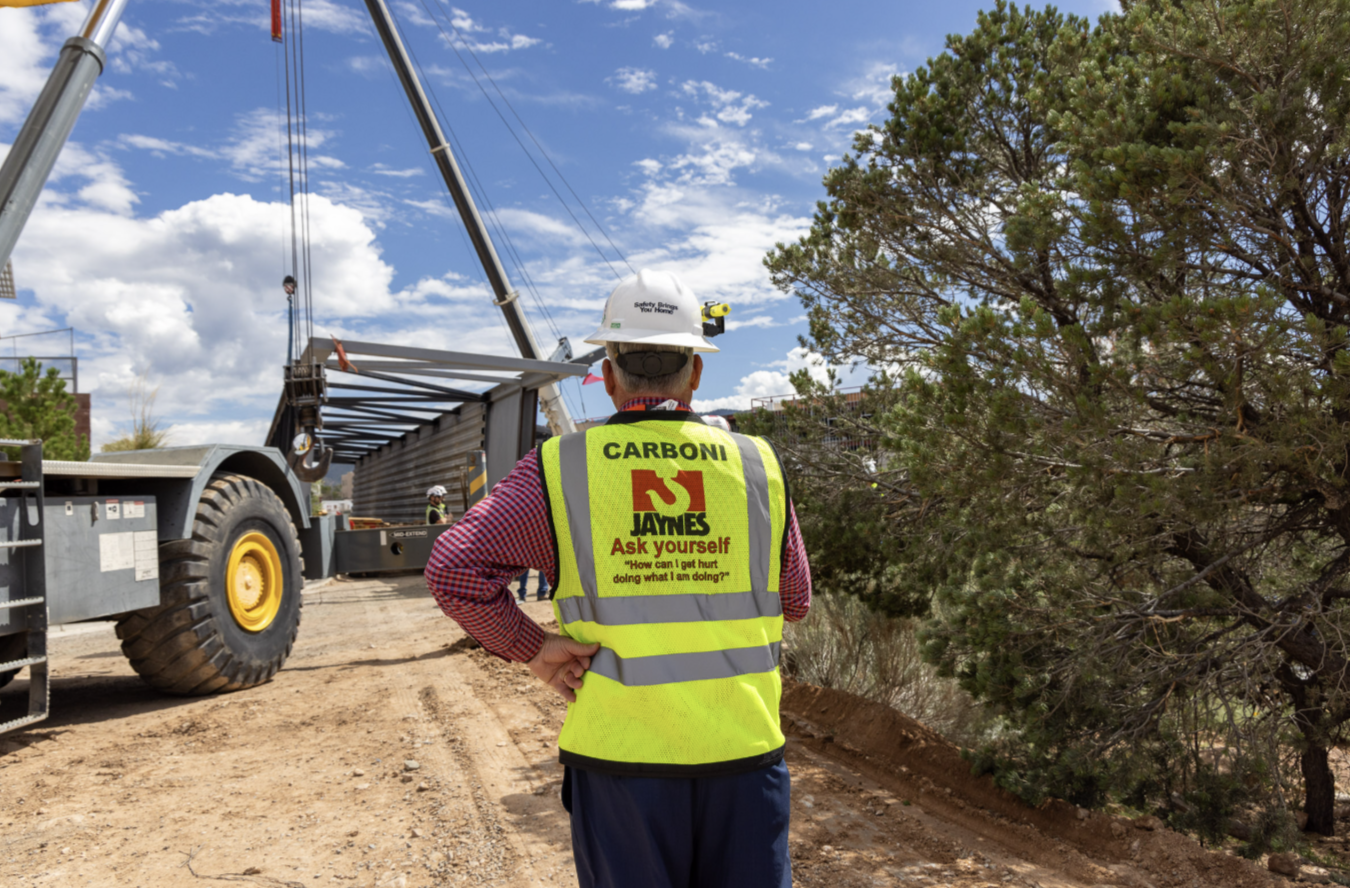
Two of three bridge sections in place during CHRISTUS St. Vincent’s Regional Cancer Center “Crane Week.” One more to go…
This umbilical cord, a bridge for pedestrians and utilities, does far more than connect two buildings. It serves as:
- A patient and staff pedestrian pathway
- A protected, climate-controlled transport route for patients, and
- A connection to critical utilities, water, HVAC, electrical, IT, and medical systems
Inside the bridge are dozens of conduits, more than 28 systems, delivering everything needed to operate a modern cancer center.
The implications of this decision were far-reaching.
Clinical Impact
Patients requiring radiation therapy can be transported directly from inpatient beds to treatment areas without leaving the building, eliminating the need for stressful ambulance transfers and improving both patient safety and comfort.
Operational Efficiency
By centralizing infrastructure, the hospital avoids maintaining duplicate systems, reducing long-term maintenance and facility lifecycle costs.
Sustainability
The solution eliminates redundant plant equipment and reduces both long-term facilities management costs and energy consumption, an often-overlooked aspect of sustainable construction.
Land and Environmental Stewardship
The bridge spans a protected arroyo, avoiding below-ground construction that would have triggered regulatory and environmental challenges.
What began as a logistical and regulatory constraint evolved into a defining feature of the project, one that Carboni and the broader team now view as a legacy achievement.
“There are things we did from an engineering perspective that most people will never see,” he said. “But innovations like the bridge make the building remarkable. It’s just not visible to every visitor.”
Engineering Precision and Logistical Choreography: LINAC Vaults
At the heart of the facility are its most technically demanding environments, linear accelerator (LINAC) vaults used for radiation therapy. Jaynes self-performed this sophisticated concrete work.
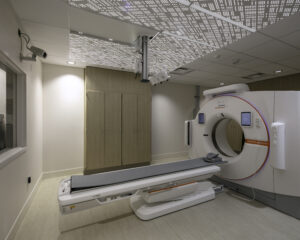
The Magnetic Resonance Imaging scanner room.
Building a linear accelerator vault is one of the most complex tasks in healthcare construction. These rooms are engineered to contain high-energy radiation, requiring massive concrete walls, here 8 feet thick. Instead of heavy doors, maze-like entries safely dissipate radiation.
Precision is critical. Minor deviations can impact safety and trigger incredibly costly rework. The team involved is extensive: multiple physicists, medical equipment vendors, installation teams, materials engineers, New Mexico state regulators, Santa Fe city regulators, and more, all working to get it exactly right.
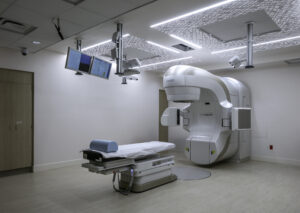
One of the Linear Accelerator (LINAC) Radiation Therapy rooms.
Ultimately, the job requires aligning physics, medicine, and construction into a space that’s safe, certifiable, and ready to treat patients.
A LINAC vault, despite its bunker-like function, needs to become a healing space that’s calm andsupportive for patients undergoing cancer treatment.
Jaynes worked closely with design partners to refine shielding strategies, optimizing material use while maintaining strict safety andregulatory standards.
One key outcome: eliminating the need for oversized, intimidating treatment doors.
This seemingly small design improvement has a meaningful impact on patient experience, reducing anxiety in one of the most stressful parts of cancer treatment.
Digital Construction and BIM: Building It Before It Exists
To manage the complexity of the project, the team relied heavily on Building Information Modeling (BIM) and digital construction tools.
Through clash detection and preconstruction modeling, conflicts between systems were resolved before construction began, reducing rework and protecting the schedule.
Additional technologies included:
- Laser-guided layout systems
- Drone imaging for site logistics
- Cloud-based project management platforms, and
- Pull planning and collaborative scheduling
These tools enabled real-time coordination among architects, engineers, contractors, and hospital stakeholders, ensuring that even the most complex systems were installed accurately and efficiently.
A True CMAR Success Story
The project was delivered using the Construction Manager at Risk (CMAR) method, which proved critical to its success.
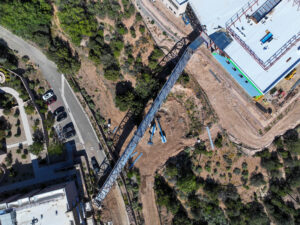
The bridge, close to finish.
Early collaboration among Jaynes, CHRISTUS St. Vincent, and design partners The Hartman + Majewski Design Group and GBBR ensured alignment on cost, schedule, and constructability from the outset.
Weekly meetings, open-book estimating, and continuous value engineering fostered transparency and shared accountability.
According to Carboni, the success of the project ultimately came down to collaboration:
“It takes a village on a project as complex as this. We worked through issues together, solved problems together, and made compromises that were best for the community.”
This level of integration is a hallmark of award-winning construction projects in New Mexico, and a key reason the project stood out to AGC judges.
Safety, Workforce, and Community Impact
Working adjacent to active patient care areas required an elevated approach to safety.
Enhanced protocols included:
- Infection prevention and containment measures
- Air quality monitoring
- Strict site-access controls, and
- Daily safety planning and reporting
The project achieved strong safety performance, particularly notable given the sensitive healthcare environment.
Beyond safety, the project delivered a meaningful economic impact by prioritizing local subcontractors and workforce participation, strengthening New Mexico’s construction industry.
Expanding Access to Cancer Care in Northern New Mexico
The completed facility represents a major advancement in medical facility construction with real-world impact.
 For patients across Northern New Mexico, the center:
- Reduces travel distances for treatment
- Centralizes oncology services
- Improves continuity of care, and
- Enhances overall patient experience
It is, at its core, a project defined by purpose.
“Unfortunately, we have to build something like this,” Carboni reflected. “But we should make it as comforting and welcoming as possible.”
Why This Project Won the AGC NM Best Buildings Grand Prize
The Associated General Contractors of New Mexico Best Buildings Grand Prize recognizes projects that excel across multiple dimensions:
- Construction management
- Innovation
- Safety
- Sustainability, and
- Community impact
The CHRISTUS St. Vincent Regional Cancer Center meets and exceeds these criteria.
It is not just a technically complex project. It is a project where:
- Design supports healing
- Engineering drives long-term value
- Collaboration enables innovation, and
- Construction serves a broader mission
The Project Team’s Legacy
For the project team, from engineers and architects to builders and healthcare leaders, the CHRISTUS St. Vincent Regional Cancer Center represents something lasting.
“Thirty years from now, people probably won’t know the names of the people who built this,” Carboni said. “But the building will still be here, helping people.”
That sentiment captures the essence of the project and why it resonates so strongly with both the industry and the community.
For Jaynes Corporation, the Grand Prize win reflects a continued commitment to building with precision, partnering with purpose, and delivering facilities that matter.
Two Projects In One
The CHRISTUS St. Vincent Regional Cancer Center is, in many ways, two projects in one.
There is the visible project: a beautiful, patient-centered healthcare facility, that some locals call “more of an art gallery than a hospital.”
And then there’s the invisible project. A deeply considered system of engineering, logistics, bridge-building, and vision that makes the building smarter, more efficient, and more sustainable.
Together, they form a project worthy of New Mexico’s highest construction honor and a model for the future of healthcare construction.

Jaynes is a great place to work. For career opportunities at Jaynes, please visit our Careers section.